
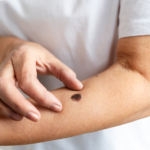
Skin Cancer Early Diagnosis and Follow-up
7 October 2025
Fungal Infections
7 October 2025Mole (Nevus) Monitoring & Dermatoscopy
Mole (nevus) monitoring is the process of regularly examining congenital or acquired moles on the skin. Through detailed examination with dermatoscopy, the risk of skin cancer can be detected early, and the necessary treatment methods can be applied.
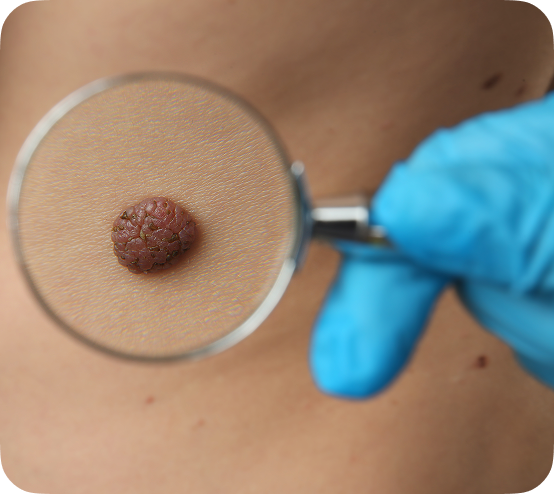
Moles (nevi) are pigmented structures that appear on different areas of the skin and are generally harmless. However, some moles can change over time and may carry a risk of skin cancer. For this reason, it is of great importance that moles are checked at regular intervals by a dermatology specialist. Early diagnosis saves lives.
Signs of Change in Moles
The following changes in moles can be a sign of risk:
- Rapid growth in the size of a mole
- Color changes (irregularity of light-dark shades)
- Irregularity of the mole’s borders
- Bleeding, itching, or crusting
- Rapid appearance of new moles
What is Dermatoscopy?
Dermatoscopy is an examination performed with the help of a special device that allows for the magnified and detailed inspection of moles. The dermatoscope plays a critical role in the early diagnosis of skin cancer by detecting changes that are not visible to the naked eye.
The Importance of Mole Monitoring
- Early diagnosis of skin cancer
- Timely detection of at-risk moles
- Prevention of unnecessary mole removal procedures
- Creation of a personalized monitoring plan
How is Mole Monitoring Performed?
1. Initial Examination
All moles are examined in detail, and those considered at-risk are recorded.
2. Dermatoscopic Photography
Photographs of at-risk moles are taken for comparison in subsequent check-ups.
3. Regular Check-ups
A check-up is planned every 6 months or annually, depending on the individual’s risk status.
4. Removal of Suspicious Moles
Moles that carry a cancer risk are removed with minor surgical procedures and sent for pathological examination.
Risk Factors for Moles
- Family history of skin cancer
- Fair skin tone and sensitivity to the sun
- Presence of a large number of moles
- Having had severe sunburns in childhood
Frequently Asked Questions
Are moles always dangerous?
No, the vast majority of moles are harmless. However, some can be risky, which is why they should be checked.
Is dermatoscopy painful?
No, dermatoscopy is a completely painless and non-invasive examination.
Should moles be removed?
Only moles that are considered at-risk are removed. Unnecessary mole removal is not recommended.
Mole (Nevus) Monitoring and Dermatoscopy at Our Clinic
At our clinic, a detailed examination of moles is performed with dermatoscopy. Through regular monitoring and early diagnosis, we reduce the risk of skin cancer and create rapid treatment plans when necessary.
You too can safeguard your skin by scheduling an appointment with our dermatology specialist for mole (nevus) monitoring and dermatoscopy.


